

New version at top. Old version retained and appears next
The book I picked up, called a “reader,” is boldly entitled Social Problems of the World. Looks like it is for students, or college students, and the date reads: 2000, or Y2K. This name under the title reads: Frances V. Moulder. It is called “Social Problems of the World.” Or maybe I missed the word “Modern” in the title. But overall the thing strikes me as bizarre in a way.
What I see is that the title is pointing to a specific kind of social problems. It frames “social problems” as a particular, rather than a general. The concept social problems might also be framed generally. I agree that social problems are there. It is part of our condition, but that does not have to be anything unusual. We are persons who live in the world. Of course we have problems, problems that are perhaps social. One might get around social problems i one lives in a very isolated condition, otherwise social problems are pretty much inevitable. Life has its social problems. And Life itself is a problem. But in the title of this book (found lined up with some others against the front of a small Latino grocery), this was not the intended meaning. So, I reason that certainly we are going to have problems, if we are alive -- probably social ones! People living together have problems. These are the “social problems.” On the other hand when you name your book “Social Problems of the Word” the general condition of the world is not what you are talking about. On the one hand, if you did not have social problems, you would not be a human being. On the other hand, what are the “social problems” are we talking about here? They are related to some particular sort of subject matter that the author wants to get at. The publisher wants us to discover some particular problems. Those problems are the ones elucidated by the book. Yu won’t see any place where humans live that has no social problems that is not what the book is about.
So, there is a “problem” here, if I may the word. The social problems are specific ones. Someone has something specific in mind here. Let us look further into the book -- but we will take up on page 61. (The earlier pages happen to be missing.) Let’s just take it right from the first words I can read, without too much imposition of my own taste. Well, here goes nuthin’!!! (I think it takes up with social decision about what items...)
... “ are distributed and to whom, how the conditions of work are managed and controlled, and so on. The second category has to do with state policy: which groups actually participate in shaping it?
As far as investment decisions...they are excluded from popular control in the United States, which [country] does not aspire to democracy ...but to capitalist democracy...”
Maybe I should give you the full text? “ ...As far as investment decisions are concerned, in law and in practice they are excluded from popular control in the United States, which does not aspire to democracy in the full sense but only to capitalist democracy, something rather different.”
This is quite a mouthful. It ranges over several subjects that are near to my heart, and that Moulder may discuss later in the text. This was just a small section. But I find It good to start in the middle like that. It works for me, because I am Autistic (TM). I would get all bogged down in words otherwise. When I use this method, and start at an arbitrary location within a long text I seem to get good results. I suppose this isn’t the way books are meant to be read but for me it seems to work. In this case, the decision was made for me as the only pages left to read were sixty pages into it. So there.
One can only shake one’s head. The nerve these people had! The publishing company is Thomson Learning. The company seems to be international in scope (the title page is cut in half but I can see that the company has offices in Connecticut, London, and something Asia at which point the page tears to interrupt any possible exciting learning adventures I could have). The nerve, to publish Moulder’s writing! This is enormous. She (or he) describes/admits herself (or himself) as “libertarian socialist and anarchist...”
It gives me the feeling of a person teetering on a high ledge, about to fall. This is not much serious disagreement with the content. I think there are pretty good ideas here. While I agree that the world operates on behalf of the few, what is astonishing to me is that they think that’s a bowling pin to knock over. [This turns to be to some extent my mistake. On p.61 you would not get the “Introduction” but rather it was an article. I cannot tell who the writer is but I read on and I was making something up here. So what follows is fiction, that’s all that changes here...] I am seeing the arrogance of all this. Here is someone publishing something that only .01 % of the persons of the world believe in. Then they are disseminating it through a major publisher. There was nothing there that was stopping the creators of the text from publishing it, that we know because I have the book.
The text continues to the next paragraph. “In a capitalist democracy, the primary concern of everyone (my emphasis here!) must be to ensure that the wealthy are satisfied...” Yep, everyone. Everyone except the courageous Frances V. Moulder who done broke that old mold-er, going it alone, and with the pubisher they apparently hope that this text (which includes some authors whose name is familiar to me, e.g. Benjamin Barber) will just break through all obstacles toward the goal of real social change. It seems more likely that this is a fantasy, and one that they were nourishing for all it was worth.
It is just strange; Moulder herself refers to what the primary concern of everyone is but that is subsequently contradicted. There are also persons (e.g. college professors) who are not everyone. And they are publishing this textbook as if to turn the heads of all the students -- a book of collected writings about [insert drum roll] “Social Problems of El Mundo.” So over the top. It is as if they imagine as soon as they knock this out everyone will get it and, presto, and social change goals are achieved. There is no way. That won’t happen, will it?
It is not that these are bad arguments or wrong arguments. They aren’t; there are good ideas here. But what happens, when we look at it the context instead of content? I am looking, instead, at how a society promotes and disseminates the ideas: the social context of publishing this book. It looks bizarre -- as if they thought they would just roll this out and... Presto!, it would change the world.
--------------- --------------- -------- ----------------- ----------- --------- -------
Yes, it is a woman. Here is one result from my search of the author’s name: https://linkedthroughslavery.com/one-womans-complicity/
Today I had the good fortune to pick up a book. The book I picked up, called a “reader,” is boldly entitled Social Problems of the World. Looks like it is for students, or college students, and the date reads: 2000, or Y2K. This name under the title reads: Frances V. Moulder. It is called “Social Problems of the World.” Or maybe I missed the word “Modern” in the title. But overall the thing strikes me as bizarre in a way.
What I see is that the title is pointing to a specific kind of social problems. It frames “social problems” as a particular, rather than a general. The concept social problems might also be framed generally. I agree that social problems are there. It is part of our condition but that does not have to be anything unusual. We are persons who live in the world. Of course we have problems, problems that are perhaps social. One might get around social problems if one lives in a very isolated condition, otherwise social problems are pretty much inevitable. Life has its social problems. And Life itself is a problem. But in the title of this book (found lined up with some others against the front of a small Latino grocery), this was not the intended meaning. In the more general sense, I reason that certainly if we are alive we are going to have problems — probably social ones! People living together have problems. Those are the “social problems” persons endure and live within. Life is like that—what do you think your “immune system” is for? On the other hand a book named “Social Problems of the Word” is not discussing any general condition or existential reality. That is not what the book is about (or the book’s title the way I initially perceived that title). On the one hand: if you do not have social problems, you are not the usual sort of human being. On the other hand, this book is about something else. What the writer is discussing in that tome are those “social problems.” There are specific social problem the book is about. This is how I perceived book as being related to some particular sort of subject matter. That is what the author wants to get at. The publisher wants us to discover some particular social problems as elucidated withing the pages. While, on the one hand, you won’t see any place where humans live that has no social problems, that is not what the book is about.
So, there is a “problem” here, if you follow me so far. The social problems are specific ones. Now let us look further, into the book, but we take it up on page 61. (The earlier pages happen to be missing.) Let’s just take it right from the first words I can read, without too much imposition of my own taste. Well, here goes nuthin’!!! (I think it takes up with social decision about what items...)
... “ are distributed and to whom, how the conditions of work are managed and controlled, and so on. The second category has to do with state policy: which groups actually participate in shaping it?
As far as investment decisions...they are excluded from popular control in the United States, which [country] does not aspire to democracy ...but to capitalist democracy...”
Maybe I should give you the full text? “ ...As far as investment decisions are concerned, in law and in practice they are excluded from popular control in the United States, which does not aspire to democracy in the full sense but only to capitalist democracy, something rather different.”
This is quite a mouthful. It ranges over several subjects, if I read closely (as I tend to do, although I miss details quite often) and these topics are near and dear to my heart Moulder may discuss it more, later in the text as this was just a small part of the book, a book of “readings” about “social problems of the …world.”
I find it good to start in the middle — yep, just like that. It works for me, because I am Autistic (TM). I would get all bogged down in words otherwise. When I use this method, and start at an arbitrary location within a long text I seem to get good results. I suppose this isn’t the way books are meant to be read but for me it seems to work. In this case, the decision was made for me as the only pages left to read were sixty pages into it. So there.
One can only shake one’s head. The nerve these people had! The publishing company is Thomson Learning. The company seems to be international in scope (the title page is cut in half but I can see that the company has offices in Connecticut, London, and something Asia at which point the page tears to interrupt any possible exciting learning adventures I could have). The nerve, to publish Moulder’s writing! This is enormous. She (or he) describes/admits herself (or himself) as “libertarian socialist and anarchist...”
It gives me the feeling of a person teetering on a high ledge, about to fall. This is not much serious disagreement with the content. I think the books has pretty good ideas. I agree that the world operates on behalf of the few; what astonishes me is that they think that’s a bowling pin to knock over. I am seeing the arrogance. It comes across as arrogance, because here you have someone publishing something that only .01 % of the worlds believes. They are then seen to be disseminating it through a major publisher. There was nothing there that was stopping them, obviously. The creators of the text are publishing this, that we know: I have the book.
The text continues to the next paragraph. “In a capitalist democracy, the primary concern of everyone (my emphasis there, raders!) must be to ensure that the wealthy are satisfied...” So Moulder said “everyone.” Everyone — except the courageous Frances V. Moulder who done broke that old mold-er, going it alone here, or maybe with the pubisher and the impression I get is they hope this text (which includes some authors whose name is familiar to me, e.g. Benjamin Barber) will just break through to destroy all obstacles in the path of real social change. It seems more likely that this is a fantasy, but it seems to be one that they were nourishing for all it was worth.
It is just strange. Moulder herself refers to her minor place in the public world. She notes what the primary concern of “everyone” is. And that is contradicted by her own writing so I guess there are also persons (e.g. college professors) who are not everyone. And they are publishing the textbook, as if to turn the heads of all the students — a book of collected writings about [insert drum roll] “Social Problems of El Mundo.” IT comes across as so over the top. It looks as if they imagine that, as soon as they knock this “reader” out with Moulder’s introduction which we briefly quoted from, then everyone just gets it, because it obviously TRUE. And, presto, the necessary left social change goals are achieved. There is no way. That won’t happen.
As said: It is not that these are bad arguments or wrong arguments. They aren’t; there are plenty of good ideas here that I agree with (and I few I do not). But what happens here is that we may look at it the context, not content. Then what? I am looking at how a society promotes and disseminates ideas and at the social context of how publishing a book works. It looks bizarre. It look like they thought they would just roll this out and Presto! It will infailable just change the world.
--------------- --------------- -------- ----------------- ----------- --------- ------ Yes, so this is a woman writer. Here is one result from my search of the author’s name: https://linkedthroughslavery.com/one-womans-complicity/
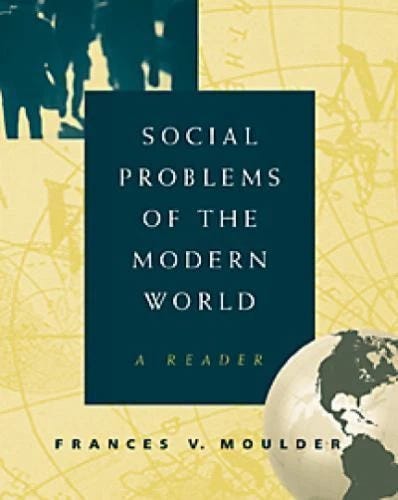
HELLO! This is one of the weirdest things I have ever posted here. When I opened the book up to page 61 I simultaneously believed it to be the "introduction" because it was at the beginning. So, no, Moulder never said those things. What is this called? A "retraction"????
Anyways I am sticking on this theme and the next one (already up) extends this same discussion, which is about some very, very odd things that happen in Western culture when various books and other printed matter are disseminated. I am also analyzing a copy of "Nat'l Geographic History," that is nothing but a bewildering assemblage of random "factoids" from history with little or no insight --- into history! I really think I am onto something, despite the slightly incredible factual errors. So "fact" is another recent topic. And this is how it going on "jacob's Newsletter" or I suppose I SHOULD say Jacob's Incredible Subtsack page. (misspelling intended this time)